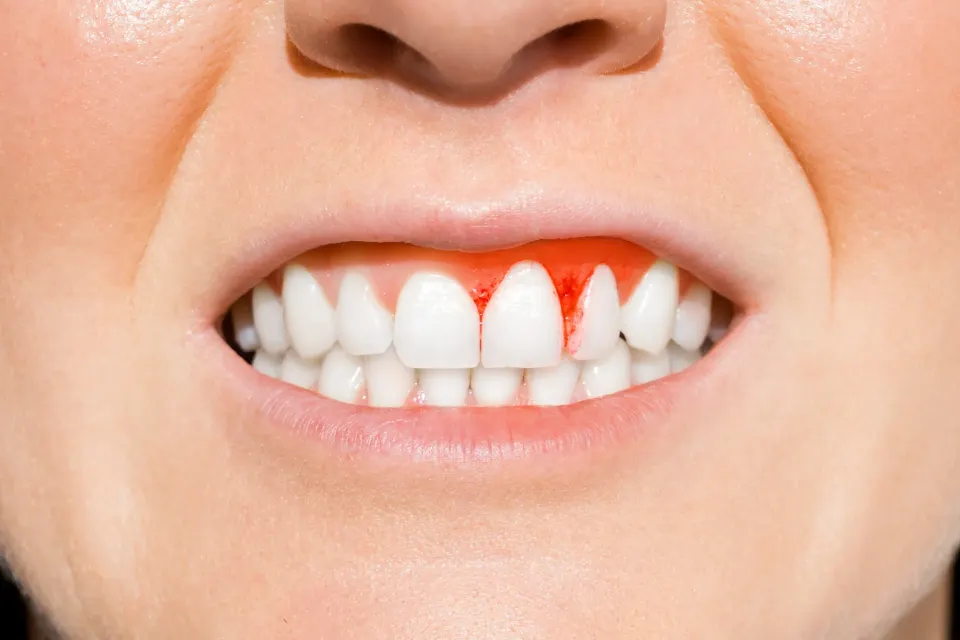



The primary driver of bleeding gums is the accumulation of dental plaque, the sticky biofilm of bacteria that forms continuously on tooth surfaces and below the gumline. When plaque is not removed through consistent brushing and flossing within 24-48 hours, the bacteria produce toxins that trigger gingival inflammation. The body responds by sending increased blood flow to the area, making gum tissue swollen, sensitive, and prone to bleeding at the slightest contact. The National Institute of Dental and Craniofacial Research identifies plaque biofilm as the foundational cause of the most common forms of gum disease.
If plaque is not removed, it hardens into calculus (tartar) within 72 hours, a rough mineral deposit that cannot be removed by home care and that irritates the gum tissue further. At this stage, inflammation deepens from gingivitis (reversible) toward periodontitis, where the infection migrates below the gumline and begins destroying the periodontal ligament and alveolar bone that hold teeth in place. Periodontitis causes irreversible bone loss and is the leading cause of adult tooth loss in the United States.
Beyond plaque, several secondary factors lower the threshold for gum bleeding. Hormonal changes during pregnancy, puberty, and menstruation increase gum tissue sensitivity. Certain medications, including blood thinners, calcium channel blockers, and anti-epileptics, can cause gum changes or reduce the body's ability to respond to inflammation. Nutritional deficiencies in vitamin C or vitamin K impair tissue integrity and clotting, respectively. Systemic conditions such as diabetes and leukemia alter immune response and can make gums more reactive. Tobacco use restricts blood flow and masks bleeding, which can delay diagnosis.