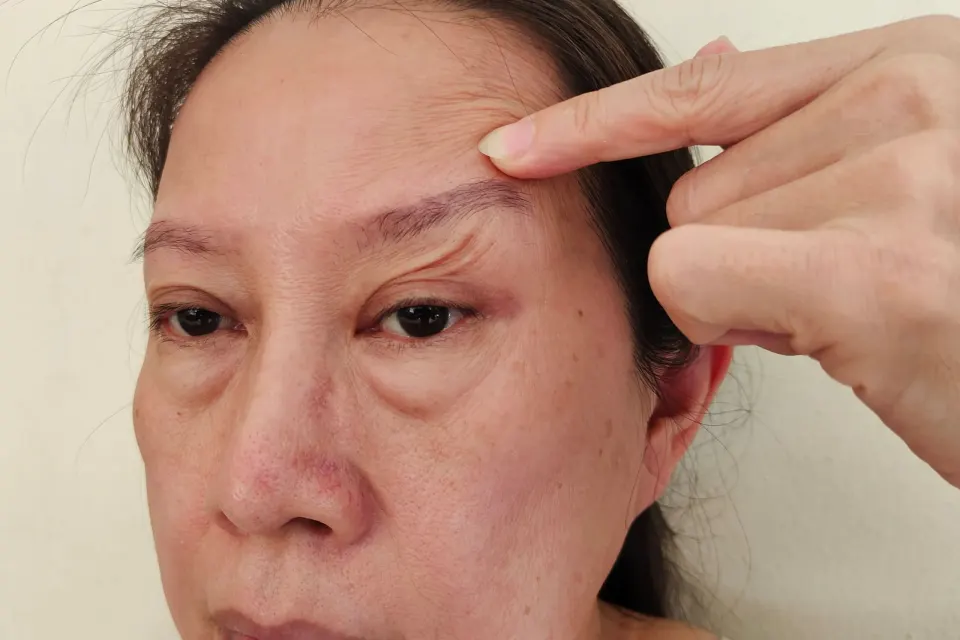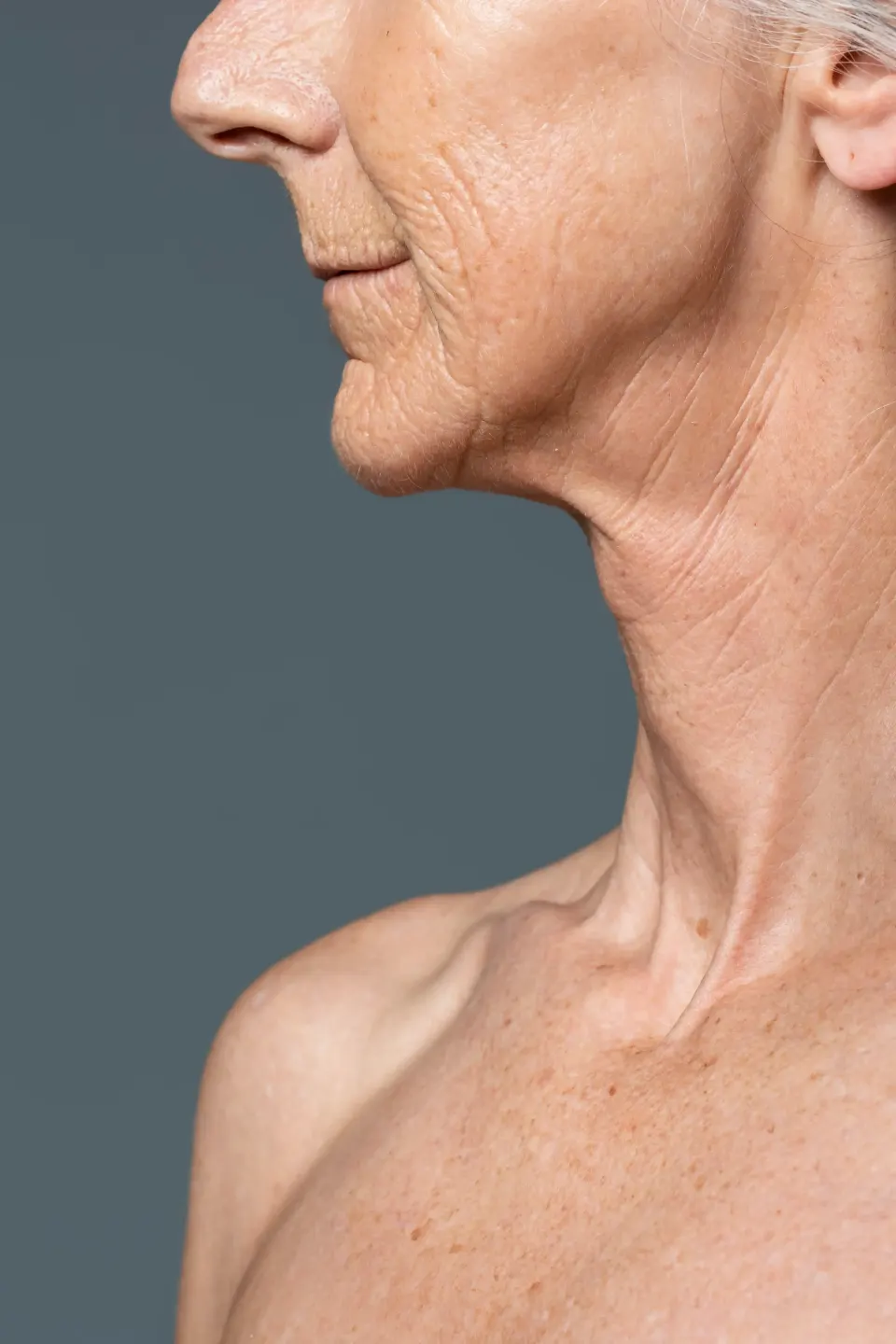



The primary driver of skin laxity is a measurable, age-related decline in collagen production. Adults lose roughly 1% of dermal collagen per year beginning in their mid-20s, according to data published by the American Academy of Dermatology. By the time a person reaches their mid-40s, a significant portion of the structural framework that once held facial tissues taut has been lost. Elastin fibers, which allow skin to recoil after stretching, undergo similar degradation and become fragmented and less functional. The combined loss of these two proteins removes the scaffolding that keeps skin lifted and resilient.
When collagen and elastin levels drop, the dermal layer physically thins and weakens. Facial fat pads that once provided volume and support in the midface begin to atrophy and descend along predictable anatomical pathways. Cheek volume migrates toward the nasolabial folds, jowling develops along the mandibular border, and the neck loses definition as the platysma muscle relaxes and overlying skin follows. These are not surface-level changes. They reflect structural reorganization at multiple tissue layers simultaneously.
A secondary but powerful accelerant is photoaging. Chronic ultraviolet exposure generates reactive oxygen species that degrade existing collagen and suppress fibroblast activity, the cellular process responsible for new collagen synthesis. The National Institutes of Health notes that photoaged skin shows markedly accelerated collagen fragmentation compared to sun-protected skin of the same chronological age. In a sunny climate like central Florida, cumulative UV exposure can accelerate visible skin laxity by five to ten years relative to the biological age alone.