Evaluation
Dr. Manmode palpates the masseter, temporalis, and jaw joints, reviews your symptom history, and screens for Emface contraindications.

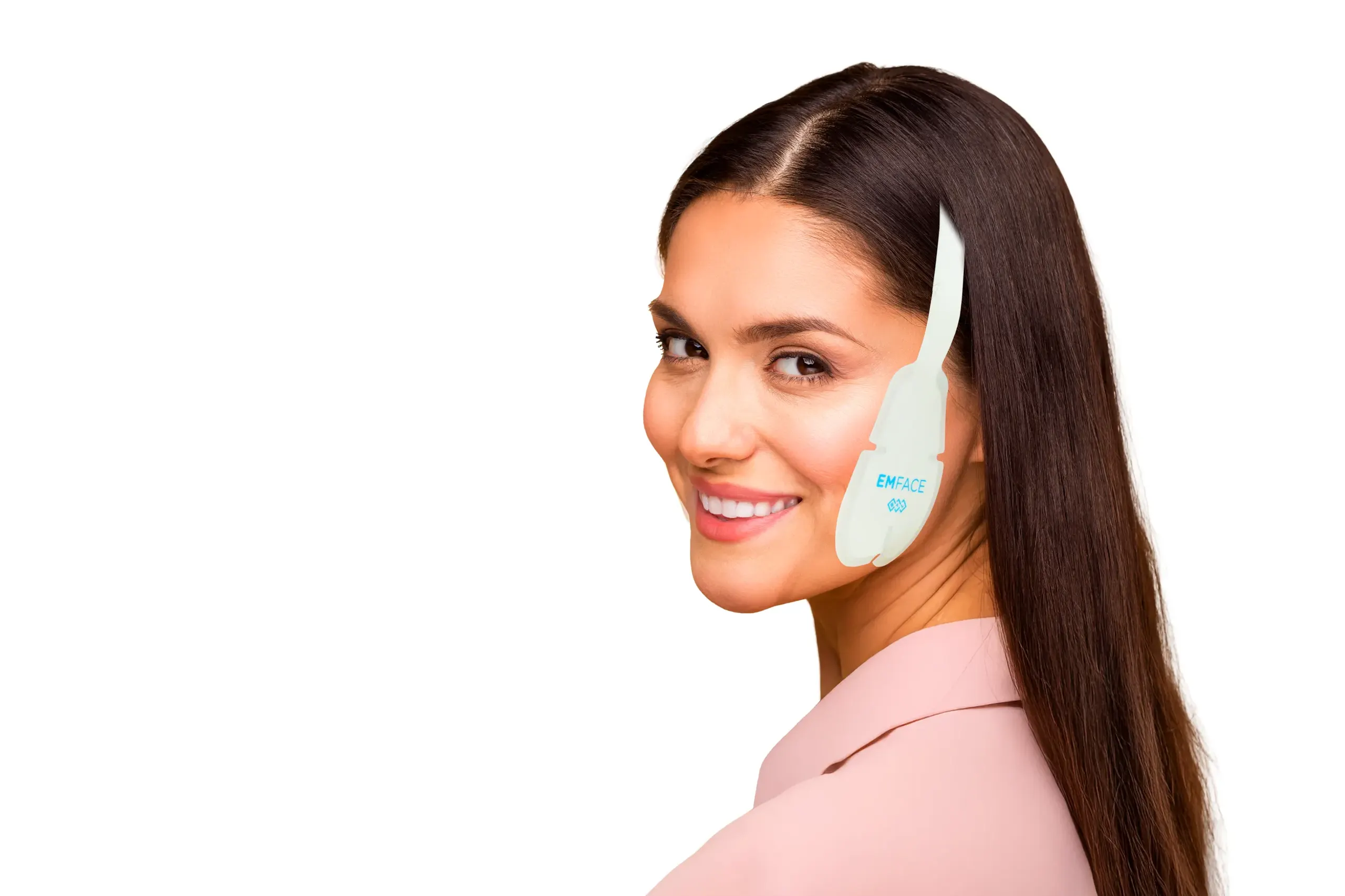
BTL Emface delivers HIFES muscle stimulation and synchronized RF to relax the masseter, ease jaw tension, and quiet nighttime clenching without needles or downtime.

A Different Path to Jaw Relief
For many patients with temporomandibular joint disorder (TMD), the masseter is the muscle that does the real damage. Constant clenching and grinding leave the masseter chronically tight, which radiates pain into the jaw joints, temples, and ears. Patients often describe a dull ache that lingers all day, clicking when they open wide, headaches that start at the temples, and tooth wear from overnight grinding. Splints help quiet the bite at night, but they do not directly relax the muscle that is causing the strain.
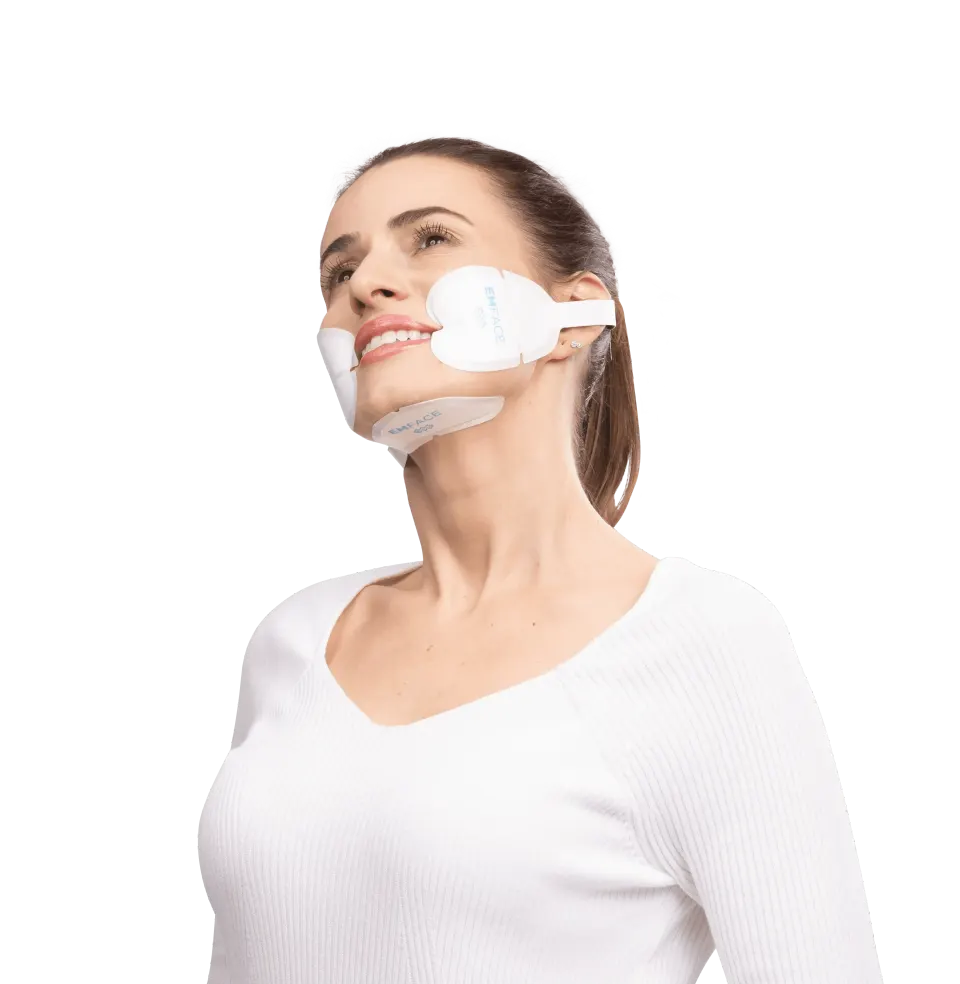
TMJ Treatment Emface addresses the masseter itself. BTL Emface delivers HIFES, a focused electromagnetic field that contracts the muscle thousands of times in a single session, combined with synchronized RF that warms the overlying tissue. Repeated supramaximal contractions fatigue the muscle, lower its resting tone, and reduce the involuntary clenching that drives TMD symptoms. The treatment is non-invasive, requires no needles or anesthesia, and is delivered through soft, hands-free applicators while you rest in the chair.

Finding Your Best Path to Relief
Most adults experiencing masseter-driven jaw tension, clenching, or bruxism-related headaches are good candidates for TMJ Treatment Emface, particularly those who prefer a non-invasive approach over needles or surgery. The American Academy of Orofacial Pain (AAOP) recommends starting with reversible, conservative interventions for the majority of TMD presentations, and Emface fits squarely within that conservative framework.
During your consultation, Dr. Manmode will conduct a complete clinical evaluation and screen for Emface contraindications. If Emface is not the right fit, she will recommend the next best step, whether that is splint therapy, occlusal equilibration, or a referral to an oral surgeon, physical therapist, or pain management specialist.
Comfort, Convenience, No Needles
No needles, no anesthesia, and no incisions are required
Return to work and daily routines immediately after each session
Directly addresses the masseter rather than masking surface-level symptoms
Comfortable applicators stay in place while you rest in the chair
Pairs naturally with bite analysis and splint therapy when indicated
Toned, more refined lower face contour reported by many patients
The cost of TMJ Treatment Emface at Dental World depends on the number of sessions and any complementary care included in your plan. A comprehensive TMD evaluation in Longwood, FL typically ranges from $150 to $350. A standard Emface series of four sessions for TMJ generally ranges from $2,000 to $3,600 in total, depending on protocol complexity and any package or maintenance options. Maintenance sessions, when indicated, are priced individually. If supportive care such as a custom occlusal splint or bite analysis is recommended, those services are billed separately. Exact pricing will be confirmed during your consultation based on your examination findings. Emface is considered an elective therapy and is not typically covered by dental or medical insurance; however, our team will verify benefits for any complementary dental services that may qualify.
Dental World believes everyone deserves access to quality tooth replacement. We offer multiple financing solutions to fit your budget:
Our team will help you understand your benefits. Contact us at (407) 830-4401 to discuss your options.

Compare Your Options
| Treatment | Mechanism | Time | Results | Duration | Downtime | Best For |
|---|---|---|---|---|---|---|
| TMJ Treatment Emface | HIFES contractions plus RF relax masseter | 20 min, 4 sessions | 2 to 3 months post-series | 6 to 12 months typical | None | Masseter-driven TMD, bruxism, clenching |
| Custom Occlusal Splint | Repositions jaw, reduces nighttime load | 60 to 90 min eval | 2 to 6 months of wear | Long-term with monitoring | None | Bite-related TMD, grinding |
| Masseter Neuromodulator Injections | Temporarily weakens muscle via injection | 15 min in-office | 1 to 2 weeks onset | 3 to 4 months per dose | Minimal | Patients open to injectables |
| Surgical TMJ Treatment | Repairs or replaces joint structures | Hours (OR) | Post-op weeks to months | Potentially permanent | Significant | Severe degeneration, failed conservative care |
Dr. Manmode palpates the masseter, temporalis, and jaw joints, reviews your symptom history, and screens for Emface contraindications.
Dr. Manmode marks applicator positions over the masseter and adjacent muscles based on your individual tension pattern.
Hands-free applicators deliver HIFES contractions and synchronized RF for about 20 minutes while you rest comfortably.
You return weekly for a total of four sessions, allowing the masseter to progressively recalibrate.
Dr. Manmode reassesses muscle tone, symptoms, and bite at scheduled check-ins, recommending maintenance when indicated.

What to Know
Most patients tolerate Emface well. Mild redness in the treated area, a warm sensation, or temporary muscle tenderness similar to a workout are the most common short-term effects and typically resolve within several hours to a day. Some patients notice slight fatigue in the masseter for a few hours after a session, which is expected given the volume of contractions delivered.
Skin irritation, transient pinpoint redness, or mild bruising at applicator contact points are uncommon and resolve without treatment. Because Emface uses electromagnetic energy and radiofrequency, it is contraindicated in patients with electronic implants in the treatment area, certain metal implants beyond standard dental restorations pending review, pregnancy, and active skin infections. Dr. Manmode screens for these conditions before any session.
Dental World follows the conservative-first consensus endorsed by the National Institute of Dental and Craniofacial Research (NIDCR): begin with reversible therapies and escalate only when conservative care has been given a thorough trial. Dr. Manmode monitors each patient's response and adjusts the protocol or recommends additional therapies as needed. Patients with significant structural joint degeneration may be referred for specialist care.
Your Questions Answered
Emface is a BTL device that combines HIFES, a focused electromagnetic muscle stimulation, with synchronized radiofrequency. For TMJ, Emface targets the masseter, the primary chewing muscle, to reduce hyperactivity that drives clenching, grinding, and chronic jaw pain.
Most patients describe the sensation as rhythmic tapping contractions and gentle warmth. There are no needles or anesthesia, and intensity is adjusted to a comfortable level throughout each session.
The standard protocol is a series of four sessions spaced about one week apart. Dr. Manmode will recommend maintenance sessions every six to twelve months based on your response and symptom pattern.
Many patients notice subtle changes in muscle tightness during the four-session series. Meaningful reductions in clenching, jaw soreness, and headache frequency typically build over the two to three months after the final session as the masseter adapts.
Yes. Emface and traditional conservative care address TMD through different mechanisms and often work well together. Dr. Manmode will coordinate Emface with splint therapy, bite analysis, or other dental care as appropriate for your case.
Emface is not appropriate for patients with electronic implants such as pacemakers or neurostimulators in the treatment area, certain metal implants in the face beyond standard dental restorations pending review, pregnancy, or active infections in the treatment area. Dr. Manmode screens for these conditions during your consultation.
Emface for TMJ is generally considered an elective therapy and is not typically covered by dental or medical insurance. Our team will verify benefits for any complementary dental services in your plan and discuss financing for out-of-pocket costs.
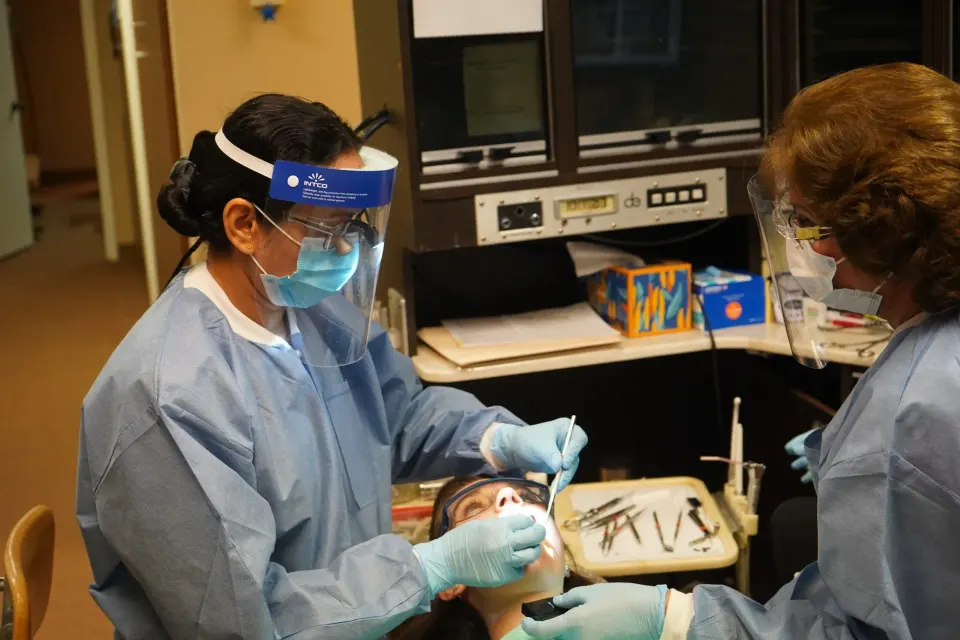
Longwood's Dentist-Led Emface Provider
Protocols designed by a DDS with deep TMD and bite expertise
Comprehensive masseter and joint exam before any Emface session
Session intensity and applicator placement tuned to your symptom pattern
Patient-centered practice where concerns are heard and care is never rushed
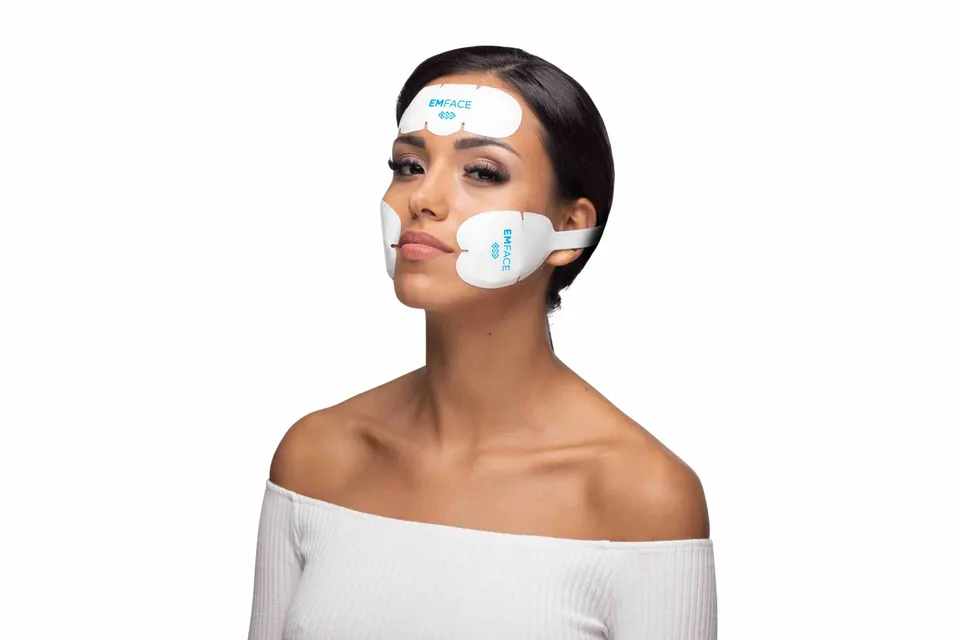
HIFES Plus Synchronized RF for the Masseter
TMJ Treatment Emface uses the BTL Emface device, originally developed for non-invasive facial muscle toning, to address the masseter and adjacent facial muscles involved in temporomandibular joint disorder. The system delivers two synchronized energies through hands-free applicators placed over the lower face and jawline: High-Intensity Focused Electrical Stimulation (HIFES), which produces selective, supramaximal muscle contractions, and synchronized radiofrequency, which warms the dermal and subdermal tissue. According to the National Institute of Dental and Craniofacial Research (NIDCR), TMD affects an estimated 10 million Americans, and masseter hyperactivity is one of the most common contributors to chronic jaw pain and bruxism.
During each 20-minute session, HIFES triggers thousands of focused contractions in the masseter and surrounding facial muscles, well beyond what voluntary effort can produce. These repeated supramaximal contractions deplete the muscle, lower its resting baseline tone, and gradually reduce the chronic clenching pattern that drives TMD symptoms. Synchronized RF heats the connective tissue to a therapeutic range, supporting collagen activity and improving the responsiveness of the treatment area. Because Emface is non-invasive, there are no injections, no needles, and no anesthesia involved.
Dr. Manmode begins with a comprehensive bite and TMD assessment that includes palpation of the masseter, temporalis, and jaw joints, a review of your symptom history, and a screening for contraindications to Emface energy. If you are a candidate, soft applicators are positioned over the lower face and jaw, and the device is set to a comfortable, gradually escalating intensity. You will feel rhythmic muscle contractions and a warm sensation while you rest in the chair.
Most patients complete a series of four sessions spaced about one week apart. Early changes in muscle tightness can be noticed during the series, and meaningful reductions in clenching, jaw soreness, and headache frequency typically build over the two to three months after the final session as the muscle adapts. Maintenance sessions, often every six to twelve months, help preserve results.