Consultation
Dr. Manmode reviews your dental and medical history, takes digital X-rays or 3D cone beam images, and evaluates your existing denture for retrofitting potential.

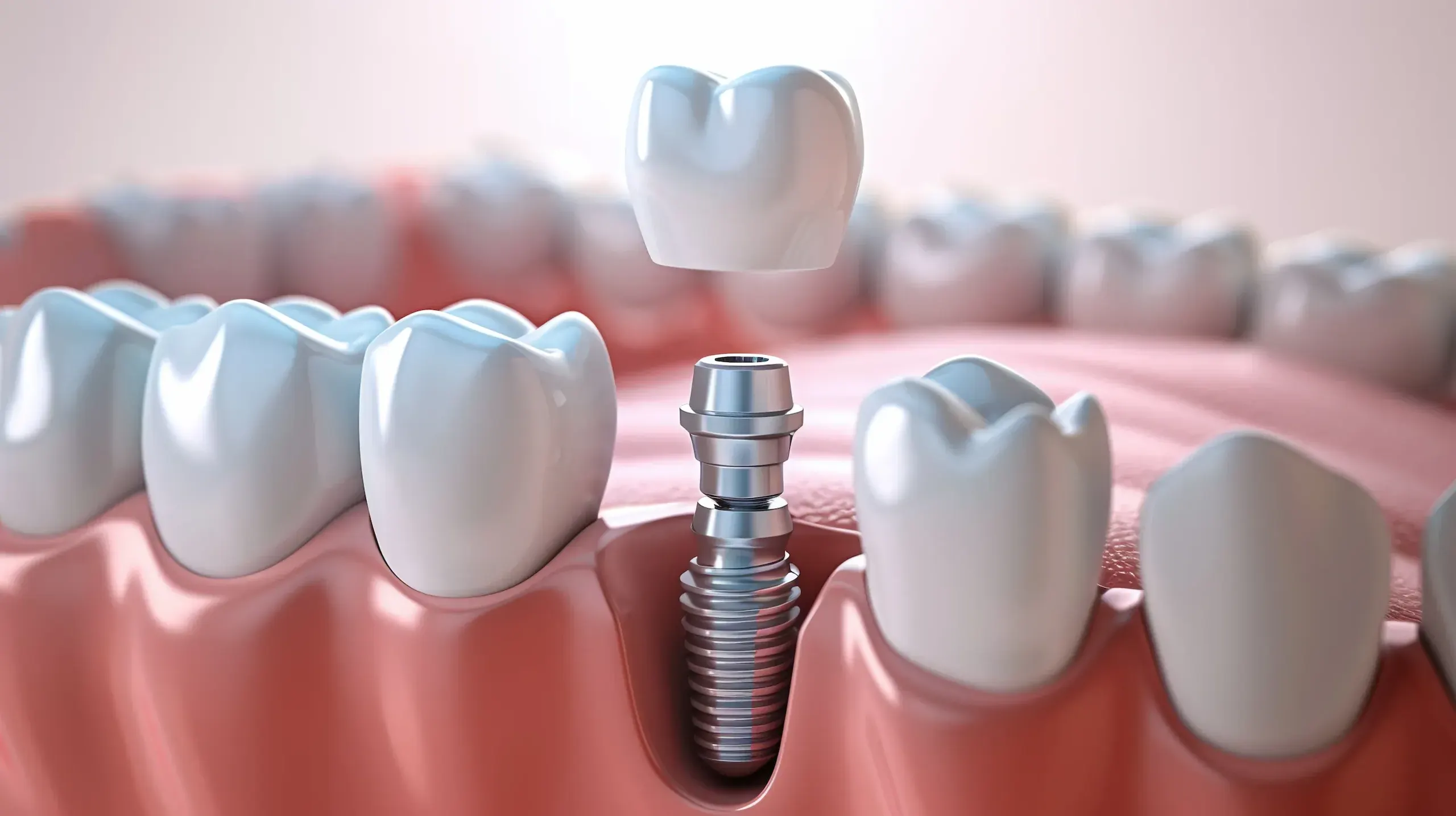
Snap-on denture anchored to 2-4 dental implants, eliminating slippage and restoring confident chewing and smiling.
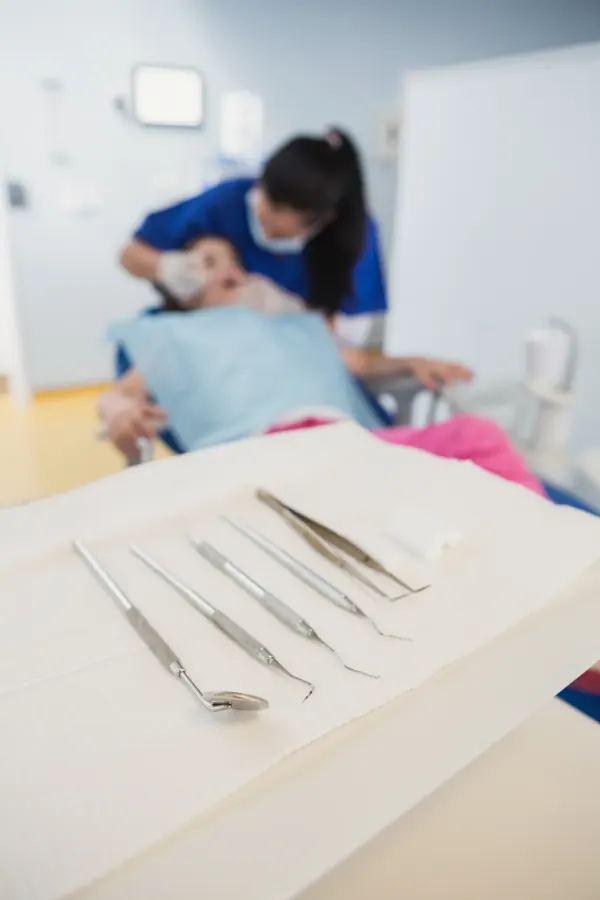
Understanding Conventional Denture Limits
Conventional dentures rest on the gum tissue and rely on suction, adhesive, or a close-fitting acrylic base to stay in place. Over time, the jawbone underneath shrinks because there are no tooth roots to stimulate it, causing the denture to loosen progressively. A loose lower denture can shift with every bite, turning a simple meal into a stressful experience. Adhesives help briefly but require daily reapplication and still allow some movement. Many patients find themselves restricting their diet to soft foods, avoiding social eating, or feeling embarrassed when their denture moves while talking. Upper dentures can trigger a gag reflex when the palate is covered, and both arches lose chewing efficiency over the years as the ridge resorbs.
An implant overdenture changes this experience entirely. Two to four titanium implants placed into the jawbone provide fixed anchor points that the overdenture snaps onto using locator or ball attachments, or a bar-clip system. The denture is stable during eating and speaking but can still be removed at night for cleaning. Because the implants transmit chewing forces directly into bone, they halt the bone resorption cycle, preserving the jaw shape for years. Patients typically recover 70 to 90 percent of natural bite force, compared to roughly 25 percent with a conventional denture. The lower arch can often be fabricated without thick flanges, and the upper design can sometimes eliminate palate coverage entirely, improving taste and comfort dramatically.
Finding Your Best Fit
Implant overdentures are an excellent solution for adults who are already wearing complete dentures or who are about to lose all their remaining teeth on an arch. The American Academy of Implant Dentistry recognizes two-implant mandibular overdentures as the standard of care for edentulous patients, reflecting strong evidence for improved quality of life, nutrition, and oral health outcomes compared to conventional complete dentures.
Dr. Manmode reviews your complete medical history, performs digital imaging, and discusses bone grafting options when needed. Most patients with an initial bone deficiency can still become good candidates after appropriate preparatory treatment.
Stability Without Fixed-Bridge Cost
Snap-on attachments eliminate denture movement during eating, speaking, and laughing
Implant roots slow or stop the jawbone resorption that shrinks the face over time
In many cases, your current denture can be retrofitted, reducing new fabrication costs
Snap off each night for thorough cleaning, then reattach in the morning with a click
Two to four implants deliver major stability gains at a lower investment than a full fixed bridge
The cost of an implant overdenture in the Longwood and greater Orlando, Florida area typically ranges from $3,500 to $6,000 per implant post (including abutment and attachment hardware) and $1,500 to $3,500 for a new or retrofitted overdenture. Total treatment for a two-implant mandibular overdenture generally falls in the range of $8,000 to $16,000, with four-implant cases or upper arch cases on the higher end of that range. Several factors affect your final investment: the number of implants placed, whether existing bone requires grafting before implant surgery, whether your current denture can be retrofitted or a new one must be fabricated, and the attachment system selected (locator, ball, or bar-retained). Because Dental World operates an on-site denture lab, adjustments and relines are handled without the additional fees and delays of outside laboratory processing. Exact pricing is determined after your consultation and imaging review, ensuring your plan is matched precisely to your clinical situation and goals.
Dental World believes everyone deserves access to quality tooth replacement. We offer multiple financing solutions to fit your budget:
Many dental insurance plans now provide partial coverage for specialized treatments. Our team will help you understand your benefits and maximize your coverage. Contact us at (407) 830-4401 to discuss your options.
Compare Your Options
| Treatment | Mechanism | Time | Results | Duration | Downtime | Best For |
|---|---|---|---|---|---|---|
| Implant Overdenture | Snaps onto 2-4 implants via locator or bar attachments | 4-9 months | Removable, highly stable | Implants: lifetime; denture: 5-10 yrs | 3-5 days per stage | Denture wearers wanting stability without full fixed cost |
| Conventional Denture | Rests on gum tissue using suction or adhesive | 3-6 weeks | Removable, unstable over time | 5-8 years before reline or replacement | None | Patients avoiding surgery or with limited budget |
| All-on-X Fixed Bridge | Fixed full arch on 4-6 implants; non-removable | 4-9 months | Permanent, fixed prosthesis | Implants: lifetime; bridge: 15-20 yrs | 5-7 days | Patients wanting a permanent non-removable result |
Dr. Manmode reviews your dental and medical history, takes digital X-rays or 3D cone beam images, and evaluates your existing denture for retrofitting potential.
Dr. Manmode places two to four titanium implant posts into the jawbone under local anesthesia; your existing denture is adjusted or a temporary prosthesis is provided for healing.
Over three to six months, bone fuses firmly around the implants. Dr. Manmode monitors integration with periodic check-ins and imaging.
Dr. Manmode connects locator or ball abutments to the integrated implants and incorporates the corresponding snap-in components into the overdenture through the Dental World lab.
Dr. Manmode verifies the bite, tests retention strength, and provides a step-by-step demonstration of how to snap the overdenture in and out for daily cleaning.
What to Know
Most patients experience predictable and temporary effects following implant placement: swelling and bruising around the surgical site that typically peaks at 48-72 hours and resolves within five to seven days, mild to moderate pain managed with prescribed or over-the-counter analgesics, minor bleeding settling within a few hours, and temporary soreness where the denture rests on healing tissue. These are normal parts of the recovery process and not signs of complications.
Implant failure from incomplete osseointegration occurs in approximately 5-10% of cases and is significantly more common in smokers and patients with uncontrolled diabetes. Peri-implantitis, an inflammatory condition affecting the bone and gum tissue around implants similar to gum disease, affects an estimated 10-20% of implants over a 10-year period and is treatable with professional intervention. Attachment component wear requiring replacement is an expected maintenance event rather than a complication, typically occurring every one to three years depending on the attachment type and bite forces. Nerve or sinus proximity issues are minimized by careful pre-surgical imaging. Infection at the surgical site is uncommon and usually resolves with antibiotics.
Dental implants are FDA-regulated Class II and Class III medical devices with a decades-long safety record in both dental and orthopedic medicine. The titanium alloys used in implant posts are biocompatible and well-tolerated by human bone tissue. Dr. Manmode's advanced implantology training and use of pre-surgical 3D cone beam CT imaging where indicated minimize anatomical risk. All surgical procedures at Dental World are performed with sterile technique and appropriate post-operative monitoring protocols.
Your Questions Answered
Most lower-arch overdentures are supported by two implants, which research confirms is sufficient for substantial stability improvements. Upper-arch cases and patients with heavier bite forces may benefit from three to four implants. Dr. Manmode recommends the number based on your bone volume and occlusal load.
In many cases, yes. If your current denture has a well-fitting base and reasonable acrylic thickness, Dr. Manmode can retrofit it with attachment housings through Dental World's on-site lab, saving the cost of a full new denture. She evaluates your existing denture at the consultation.
Implant surgery is performed under local anesthesia; patients feel pressure but not sharp pain. Post-surgical soreness is typically mild to moderate and well-controlled with prescribed or over-the-counter analgesics for the first three to five days.
An implant overdenture is removable and snaps onto two to four implants. All-on-X is a fixed, non-removable full arch prosthesis anchored on four to six implants. The overdenture costs less, allows nightly removal for cleaning, and is the better fit for patients who want major stability gains without the highest investment tier.
Yes. Nightly removal allows the gum tissue under the denture to rest and makes thorough cleaning of both the appliance and the implant abutments much easier. Dr. Manmode provides a step-by-step care routine at delivery.
The snap-in attachment components, such as locator caps, are the wearable parts and typically require replacement every one to three years, depending on bite forces and how carefully the denture is seated. The implant posts themselves can last a lifetime with proper oral hygiene and professional maintenance.
Longwood's Trusted Provider
In-house fabrication and adjustment capability means shorter wait times and precise overdenture fits
Nearly 20 years of implantology and oral surgery expertise guides every case from planning to delivery
Surgery, imaging, lab work, and denture delivery all completed at Dental World with no outside referrals
Every overdenture plan is tailored to your bone volume, existing denture, and budget goals
Implant-Retained Removable Prosthesis
An implant overdenture is a full-arch removable denture that derives its retention from two to four dental implants rather than from suction or adhesive alone. The implants are titanium posts surgically placed into the jawbone; once integrated with the bone, they connect to the denture through precision attachments such as locator abutments, ball attachments, or a milled bar. According to the American Academy of Implant Dentistry, implant-retained overdentures are considered the standard of care for edentulous patients seeking improved denture stability over conventional complete dentures.
The titanium implant posts osseointegrate with the surrounding jawbone over a period of three to six months, creating a stable biological bond. The denture then snaps or clips onto the attachment system: locator attachments use a patented nylon cap that provides directional release, ball-and-socket attachments offer a firm lateral grip, and bar-retained systems use a custom-milled bar connecting two or more implants to which the denture clips. Each system transfers chewing forces from the denture through the attachments and directly into bone, stimulating the jawbone and preventing the progressive bone loss that occurs beneath conventional dentures. Studies consistently show that even two implants significantly improve patient satisfaction, chewing ability, and quality of life compared to conventional dentures.
Dr. Manmode places the implants under local anesthesia during a surgical appointment, then allows the bone to heal and integrate around the posts over three to six months. In many cases, an existing denture can be retrofitted with attachments and used as a temporary overdenture during healing, minimizing the time patients go without a full-arch appliance. Once integration is confirmed, the attachment components are incorporated into the denture, and Dr. Manmode verifies fit, bite, and retention before final delivery. Dental World's on-site lab handles fabrication and adjustments in-house, reducing wait times compared to practices that send cases to external labs.
With proper home care, the implant posts themselves can last a lifetime. The denture acrylic and attachment components are the wearable parts and typically need refreshing or replacement every five to ten years as normal wear occurs. Most patients find the change in daily life immediate and dramatic: no more adhesives, no shifting on a bite, and the ability to return to foods they had been avoiding for years.