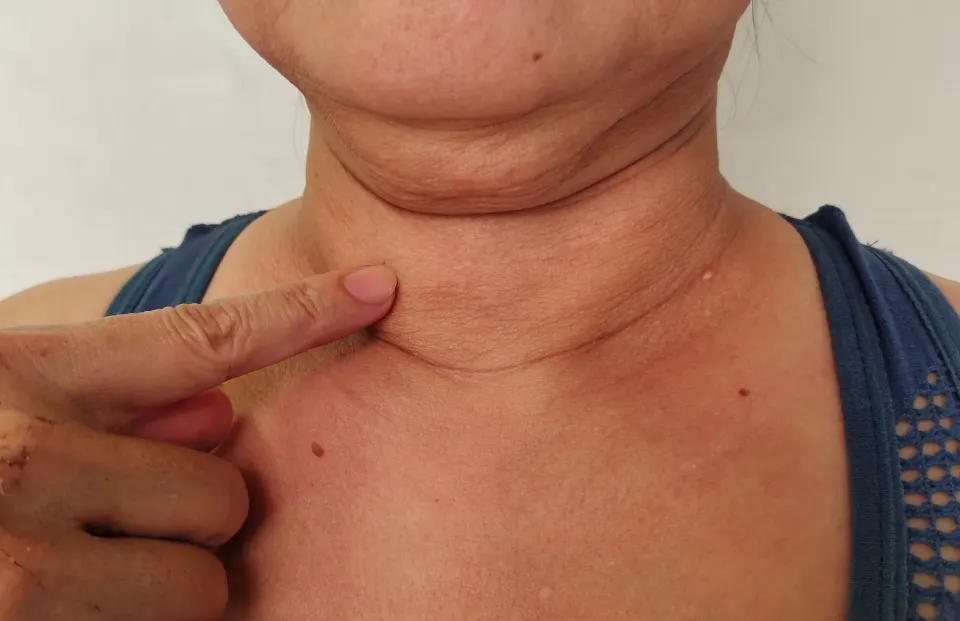
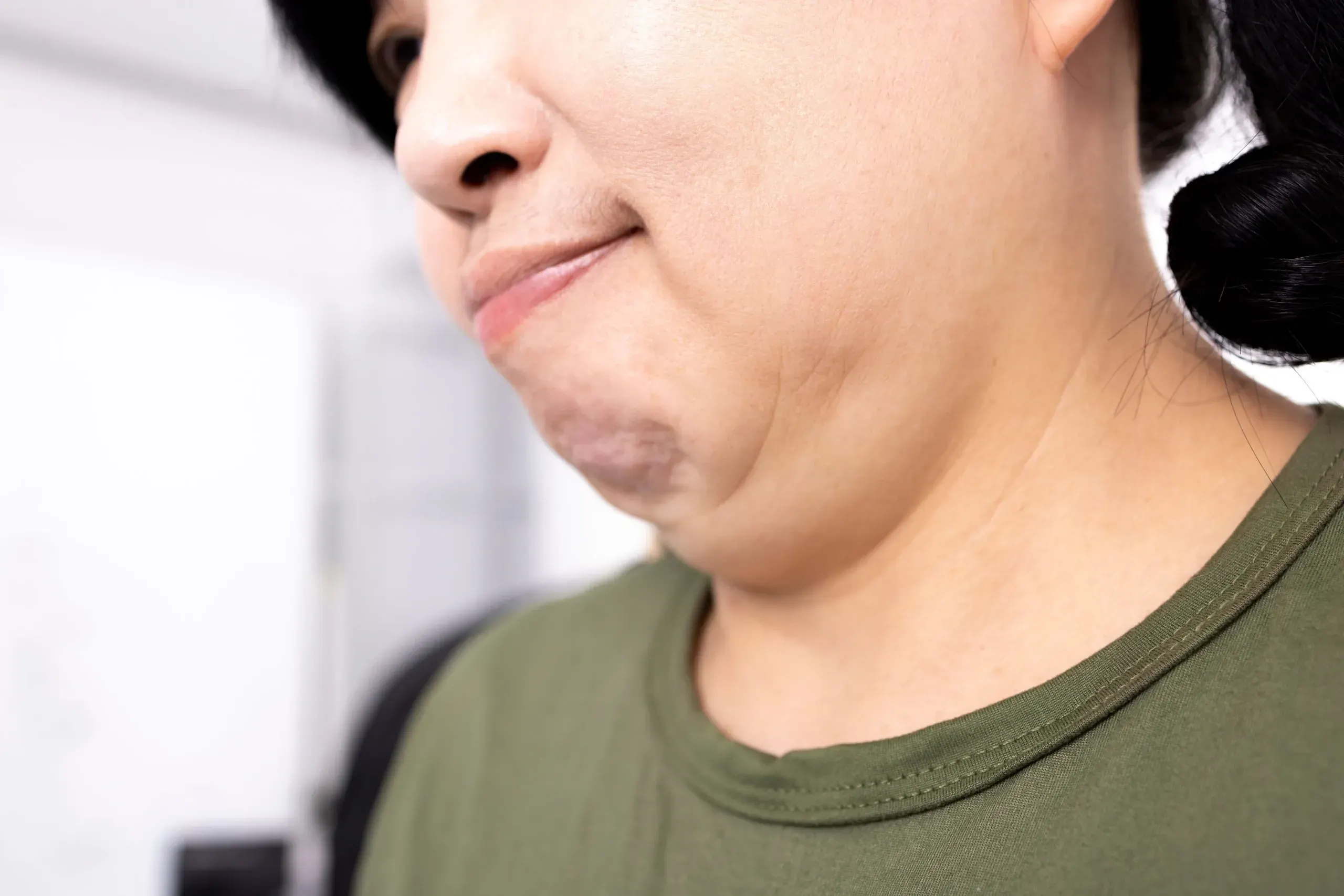

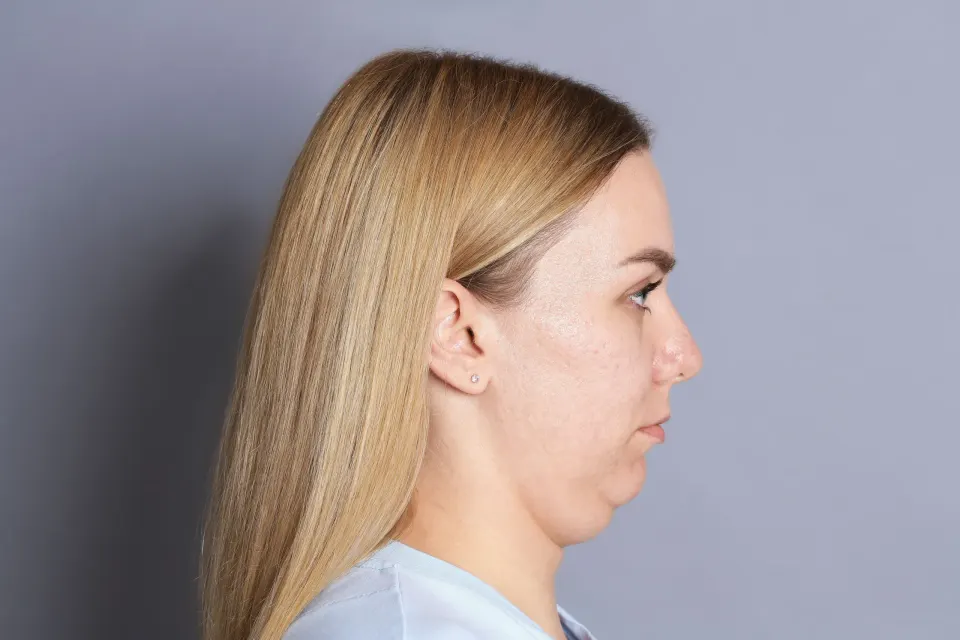
The submental region contains a discrete fat compartment called the submental fat pad, which sits just beneath the skin and above the platysma muscle. Unlike visceral fat, this compartment responds poorly to diet and exercise in many individuals. Research shows that submental fat has a higher density of alpha-2 adrenergic receptors, which suppress fat breakdown, making the area resistant to standard weight-loss efforts. According to the American Academy of Dermatology, genetics plays a primary role in how prominent submental fullness becomes, independent of overall body weight.
As skin ages, collagen and elastin fibers in the dermis lose their integrity at a rate of approximately 1% per year after age 25. This progressive loss of structural support allows the skin beneath the chin and along the neck to become lax, which amplifies the visual effect of any underlying fat or muscle weakness. A person who had a crisp jawline at 25 may notice meaningful changes by their mid-30s even without significant weight change.
The platysma, a broad flat muscle spanning from the lower face to the upper chest, loses tone over time and can develop vertical banding. When this muscle weakens or separates at the midline, it allows soft tissue to fall forward and downward, creating or deepening submental fullness. Posture compounds this: sustained forward head positioning from screen time places the platysma in a chronically lengthened state, which accelerates the visible effect.