

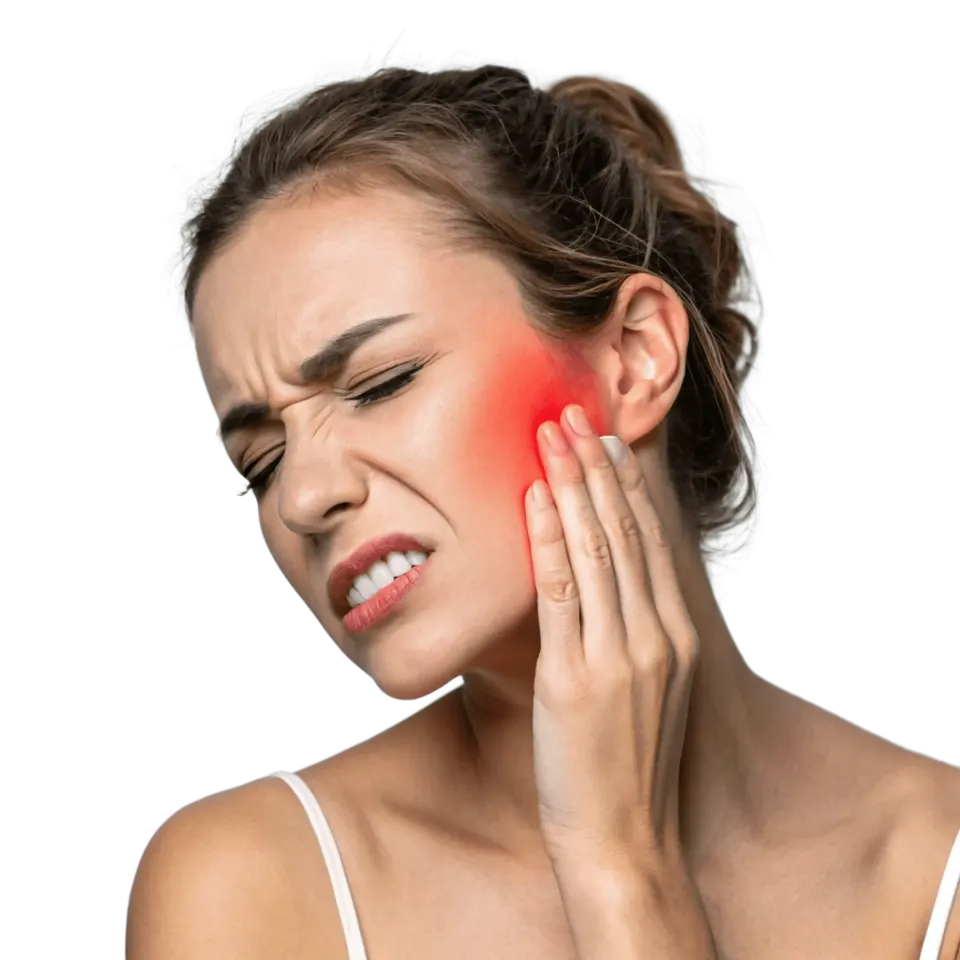

Patient with jaw pain seeking TMJ treatment at Dental World Longwood FL

TMJ Pain Treatment in Longwood, FL

Relieve Jaw Pain and Restore Comfort

Common In:11-12 Million US Adults
Primary Causes:Bruxism, Stress, Arthritis, Trauma
Treatment Time:Varies by approach
Relief Timeline:Days to several weeks
Close-up illustration of temporomandibular joint anatomy at Dental World Longwood

What Is TMJ Pain?

Recognizing the Signs

TMJ pain refers to discomfort affecting the temporomandibular joints (TMJ), the paired joints connecting your lower jaw to your skull, along with the surrounding muscles and connective tissues. When these joints or their supporting structures are not functioning properly, the condition is classified as a temporomandibular disorder (TMD). The National Institute of Dental and Craniofacial Research estimates that TMD affects approximately 11 to 12 million adults in the United States.

When you feel a clicking sensation when you open your mouth, wake up with a sore jaw or temples, or notice that chewing has become uncomfortable, you are likely experiencing symptoms of a temporomandibular disorder. Many patients describe the sensation as a persistent dull ache around the jaw, ear, or temples that worsens during meals or stressful moments.

TMJ pain is frequently misdiagnosed because its symptoms overlap with other conditions: ear infections, tension headaches, or sinus pressure. Patients often spend months or years trying to address the wrong problem before a dental professional identifies the true source. If this sounds familiar, you are not alone, and your pain is real, not imagined.

Diagram showing jaw joint mechanics and disc displacement at Dental World Longwood FL

Why TMJ Pain Happens

Understanding the Root Causes

The temporomandibular joint is one of the most complex joints in the human body. It acts as a sliding hinge, allowing you to open, close, chew, and speak. Inside each joint sits a small disc of cartilage that cushions the condyle (the rounded end of the lower jaw) as it glides against the temporal bone of the skull. When this disc is in its correct position and the surrounding muscles are balanced, the joint moves smoothly and silently. Even small disruptions to this system, however, can generate significant pain signals because the trigeminal nerve, which supplies sensation to most of the face, runs directly through this region.

Bruxism (grinding and clenching, often during sleep) is among the most common triggers. A person who grinds heavily can apply forces of 200 to 300 pounds per square inch to their teeth and joints, far exceeding the 20 to 40 pounds of force used in normal chewing. Over time, this overloads the disc and surrounding muscles, leading to inflammation, disc displacement, and chronic soreness. Stress compounds the cycle: elevated stress hormones increase muscle tension in the jaw, neck, and shoulders, which amplifies grinding and clenching behavior.

Arthritis (both osteoarthritis and rheumatoid arthritis) can erode the cartilage disc and articular surfaces, causing bone-on-bone friction and grinding sounds. Trauma, such as a blow to the jaw or a prolonged dental procedure, can displace the disc or strain the ligaments that hold it in place. Bite misalignment and prolonged poor posture, particularly forward-head posture common in desk workers, can shift the load on the joint and set the stage for TMD. These factors rarely act alone; most patients have two or three overlapping contributors.


Detailed view of TMJ disc anatomy and articular surfaces at Dental World Longwood

The Joint Anatomy Behind Your Pain

How Disc Displacement Drives Symptoms

Each temporomandibular joint is made up of three key structures: the mandibular condyle (the rounded knob at the top of the lower jaw), the articular disc (a fibrocartilage pad shaped roughly like a bow tie), and the articular fossa (the socket in the temporal bone where the condyle rests). A thin synovial membrane lines the joint and produces fluid that lubricates every movement. Ligaments, tendons, and the masseter and pterygoid muscles coordinate to control opening and closing with remarkable precision.

Disc displacement is the structural problem at the heart of many TMD cases. In a healthy joint, the disc rides on top of the condyle as it glides forward during mouth opening. When the disc slips out of position, usually forward and to one side, the condyle must push against the back of the disc rather than beneath it. This creates the familiar click or pop that patients notice when they open their mouth wide: the condyle is catching and then riding over the displaced disc. If the displacement becomes severe enough that the disc cannot be recaptured, the jaw may lock in a limited-opening position, a situation called closed lock, which causes sudden restriction of mouth opening and significant pain.

Chronic disc displacement also triggers an inflammatory response in the joint space. Inflammatory mediators, particularly prostaglandins and interleukins, sensitize the surrounding nerves, which is why patients often feel pain in areas far from the joint itself, including behind the eye, deep inside the ear, and along the neck and shoulder. Addressing disc position and muscle balance is therefore central to effective TMJ treatment, not merely managing surface-level pain signals.

Lifestyle and structural factors contributing to TMJ pain at Dental World Longwood FL

What Accelerates TMJ Pain?

Identifying Your Triggers

01

Bruxism and Clenching

Nighttime grinding and daytime clenching place extreme pressure on the joint disc and muscles, causing inflammation and soreness that compounds over weeks and months.

02

Stress and Anxiety

Elevated stress hormones increase baseline muscle tension in the jaw, neck, and shoulders, which intensifies clenching behavior and prevents the joint from recovering during rest.

03

Joint Arthritis

Both osteoarthritis and rheumatoid arthritis can erode the cartilage disc and bone surfaces inside the TMJ, leading to painful friction and reduced range of motion.

04

Trauma

A direct blow to the jaw, whiplash injury, or prolonged wide opening during dental procedures can displace the joint disc or strain the ligaments that stabilize it.

05

Bite Misalignment

A bite that does not come together evenly distributes force unevenly across the joint, favoring one side and creating cumulative strain on the overloaded structures.

06

Poor Posture

Forward-head posture, common in people who work at desks for long hours, shifts the center of gravity and changes the resting position of the jaw, increasing muscle tension throughout the day.

Dental World clinic interior in Longwood Florida

Why Choose Dental World for TMJ Pain Care in Longwood, FL

Expert Care in Longwood

  • Comprehensive Evaluation
  • Conservative-First Approach
  • Personalized Treatment Plans
  • Coordinated Care

Treatment Options Comparison

Finding Your Best Approach

Treatment Best For Session Time Results Timeline Maintenance
Emface for Face Lift and TMJ Treatment Sagging brows, flat cheeks, facial laxity 20 min Gradual over 90 days post-series 1 session every 6 - 12 months
Person experiencing jaw pain and tension headache at Dental World Longwood FL

You May Be Experiencing TMJ Pain If...

Recognizing When to Seek Help

  • Jaw Clicks When Opening
  • Sore Jaw in the Morning
  • Frequent Tension Headaches
  • Ear Pain Without Infection
  • Jaw Gets Stuck Briefly
  • Pain When Chewing
  • Worsening Tooth Wear

Frequently Asked Questions

About TMJ Pain

01 Can TMJ pain go away on its own?

Mild, short-term TMJ flare-ups sometimes resolve with rest, soft foods, and stress reduction. However, when symptoms persist for more than a few weeks or involve clicking, locking, or morning soreness, professional evaluation is typically recommended to prevent progression and address underlying causes.

02 Is clicking in my jaw always a sign of a serious problem?

Not always. Many people have occasional clicking without pain or functional limitation. When clicking is accompanied by pain, limited opening, or locking episodes, it suggests disc displacement that warrants a dental evaluation to determine whether treatment is appropriate.

03 How do I know whether a night guard or a bite adjustment is right for me?

That determination depends on your specific evaluation findings. A custom night guard is often the first step for patients whose primary issue is bruxism or muscle overload. Occlusal equilibration becomes relevant when bite imbalance is contributing to joint strain. Dr. Manmode will recommend the most appropriate option after a thorough assessment.

04 Will my TMJ pain come back after treatment?

Many patients achieve lasting relief with conservative treatment, particularly when triggers such as bruxism and stress are also addressed. Some patients require periodic maintenance, such as continued night guard use or occasional bite adjustments, to keep symptoms managed over the long term.

05 Can stress really cause jaw pain?

Yes. Stress increases the baseline tension in the muscles of the jaw, neck, and shoulders. Many patients clench or grind more during high-stress periods without realizing it. Behavioral strategies such as mindfulness, biofeedback, and physical therapy for the jaw muscles are often part of a comprehensive TMD management plan.

06 What can I do at home to reduce TMJ pain between appointments?

Applying warm moist heat to the jaw muscles for 15 to 20 minutes can reduce muscle spasm. Eating soft foods, avoiding wide opening (chewing gum, large bites), and practicing jaw rest can prevent further aggravation. Stress-reduction techniques at bedtime may also reduce nighttime clenching.

07 When should I see a dentist about TMJ symptoms?

Consider scheduling an evaluation if symptoms have lasted more than two to three weeks, if jaw locking or restricted opening has occurred, if morning jaw soreness is a regular pattern, or if headaches and ear pain cannot be explained by other conditions. Early evaluation generally leads to more straightforward treatment.

Location1250 W State Rd 434, STE 1008
Longwood, FL, 32750

Schedule Your Consultation

Scientific References