Consultation
Dr. Manmode reviews X-rays and a 3D cone-beam scan to assess bone volume and map the ideal implant position.

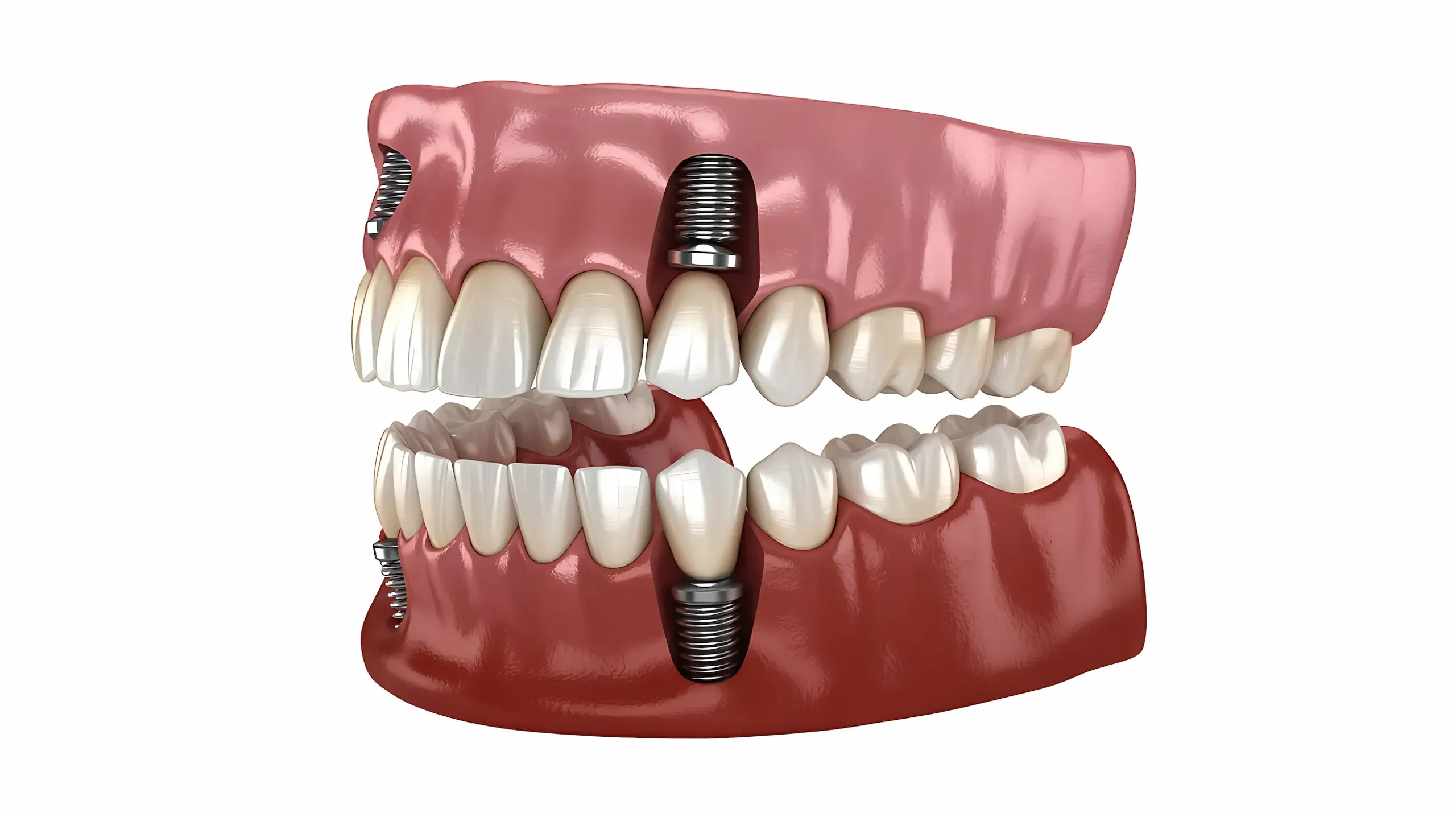
Titanium implant post, custom abutment, and natural-looking crown to replace one missing tooth permanently.
Understanding Tooth Loss Impact
Losing a single tooth disrupts far more than your smile. The gap left behind causes neighboring teeth to drift, alters your bite, and accelerates jawbone loss in the empty socket. Over time, that bone shrinkage changes the shape of your face, making you look older than you are. Many patients find that chewing becomes uncomfortable, speech is affected, and self-confidence takes a noticeable hit. A removable partial denture or dental bridge may seem like simpler fixes, but they come with their own drawbacks: bridges require grinding down healthy adjacent teeth, and neither option stops the ongoing bone loss beneath the gumline.
A single tooth implant addresses every one of those problems from the root up - literally. The titanium post is placed directly into the jawbone, where it stimulates bone growth through a process called osseointegration, stopping the bone loss that would otherwise continue for years. The adjacent teeth remain completely untouched. Once the implant fuses with the bone over 3-6 months, Dr. Manmode places a custom-crafted crown that matches the color, shape, and size of your natural teeth. The result is a stable, permanent replacement that chews, feels, and looks just like your original tooth, with a lifespan of 15-25 years or more with proper care.
Finding Your Best Restoration
A single tooth implant is an excellent option for most healthy adults who have lost one tooth and want a permanent, low-maintenance replacement. The American Academy of Implant Dentistry notes that nearly any adult in good general health can be evaluated for dental implants, with bone volume and systemic health being the primary factors assessed during consultation.
Absolute contraindications are rare. Dr. Manmode reviews your medical history, X-rays, and bone density in a thorough consultation to determine whether a single tooth implant is the safest and most effective path for your specific situation.
Permanent, Root-to-Crown Restoration
No grinding down healthy neighboring teeth as a bridge requires
Titanium root stimulates jawbone and prevents progressive shrinkage
Custom-matched crown chews and looks exactly like your natural tooth
15-25+ year lifespan with proper daily care and routine checkups
Brush and floss normally - no special removal or adhesives needed
The cost of a single tooth implant in the Longwood, FL and Central Florida market typically ranges from $3,000 to $5,500 for the complete treatment (implant post, abutment, and crown combined). Several factors influence the final fee: the need for a bone grafting procedure if bone volume is insufficient, the complexity of any extraction performed before implant placement, the type of crown material selected (all-ceramic vs. porcelain-fused-to-metal), and the number of diagnostic imaging appointments required. Because every patient's bone anatomy and oral health differ, exact pricing is discussed during your personalized consultation with Dr. Manmode. Most dental insurance plans classify implants as a major prosthetic benefit and may cover a portion of the crown; we will verify your coverage before treatment begins.
Dental World believes everyone deserves access to quality tooth replacement. We offer multiple financing solutions to fit your budget:
Many dental insurance plans now provide partial coverage for specialized treatments. Our team will help you understand your benefits and maximize your coverage. Contact us at (407) 830-4401 to discuss your options.
Compare Your Options
| Treatment | Mechanism | Time | Results | Duration | Downtime | Best For |
|---|---|---|---|---|---|---|
| Single Tooth Implant | Titanium root + custom crown | 4-9 months total | Permanent, bone-preserving | 15-25+ years | 2-3 days | One missing tooth, bone health |
| Dental Bridge | Crown on adjacent teeth | 2-3 weeks | Fixed, stable | 10-15 years | Minimal | Those avoiding surgery |
| Removable Partial Denture | Clasps to existing teeth | 3-6 weeks | Functional, removable | 5-10 years | None | Multiple missing teeth, budget |
Dr. Manmode reviews X-rays and a 3D cone-beam scan to assess bone volume and map the ideal implant position.
Under local anesthesia, Dr. Manmode places the titanium post into the jawbone with a precise surgical guide for accuracy.
Over 3-6 months, the jawbone grows into the implant surface. A healing abutment protects the site during this phase.
Dr. Manmode attaches the custom-fabricated ceramic crown, matched to your surrounding teeth in our on-site dental lab.
A six-month check-up confirms full integration and bite alignment before returning to routine annual care.
What to Know
The most frequently reported side effects are temporary and resolve within days to two weeks. These include mild to moderate swelling and bruising around the implant site (typically peaking at 48-72 hours and subsiding by day five to seven), tenderness or soreness that responds well to prescribed pain medication or over-the-counter ibuprofen, minor bleeding from the surgical site during the first 24 hours, and temporary sensitivity in neighboring teeth during the healing phase.
Implant failure, defined as the post failing to integrate with the bone, occurs in approximately 2-5% of cases and is most often linked to smoking, uncontrolled diabetes, or active infection. Infection at the implant site (peri-implantitis) affects an estimated 1-10% of patients over the long term and is mitigated by consistent oral hygiene. Nerve or tissue injury near the implant site is rare and typically temporary. Sinus involvement is a consideration for implants placed in the upper back jaw and is assessed on imaging before surgery.
Titanium dental implants are FDA-cleared Class II medical devices with a multi-decade safety record. According to a National Institute of Dental and Craniofacial Research overview, implants have one of the highest long-term success rates of any surgically placed device. Dr. Manmode's advanced training in implantology and oral surgery, combined with pre-operative cone-beam CT imaging, significantly reduces surgical risks and ensures accurate placement for optimal outcomes.
Your Questions Answered
Most patients report surprisingly little discomfort. The implant site is thoroughly numbed with local anesthesia before surgery, and post-operative soreness typically responds well to over-the-counter pain relievers. Dr. Manmode also offers oral sedation for anxious patients.
The full process takes 4-9 months from initial placement to final crown. The surgical appointment is 60-90 minutes. Osseointegration requires 3-6 months, followed by a short appointment to attach the crown. Follow-up visits are brief.
Brush twice daily, floss around the implant crown, and attend routine cleanings every six months. Unlike natural teeth, the titanium post cannot decay, but the surrounding gum tissue still requires care to prevent peri-implantitis.
Yes. The custom ceramic crown is shaded and shaped to match your surrounding teeth. Our on-site dental lab allows Dr. Manmode to oversee the fit and appearance closely before final placement.
Coverage varies by plan. Many policies cover a portion of the crown under major prosthetics but exclude the implant post itself. We verify your specific benefits before treatment so you have a clear cost picture in advance.
Insufficient bone is common after long-standing tooth loss. Dr. Manmode can perform a bone grafting procedure to rebuild the site before implant placement. The graft typically requires an additional 4-6 months of healing before the implant post is placed.
An implant preserves adjacent healthy teeth and stops bone loss; a bridge requires crowning the two teeth on either side of the gap. For most patients who are surgical candidates, a single tooth implant is the preferred long-term option.
There is no upper age limit for dental implants. Candidacy depends on jawbone density and overall health, not chronological age. Dr. Manmode has placed implants for patients well into their 70s and 80s with successful outcomes.
Longwood's Trusted Implant Provider
Specialized implantology and oral surgery credentials beyond general dentistry
Custom crowns crafted in our on-site lab for precise fit and faster delivery
Extraction through final crown placement managed under one roof
CareCredit, Cherry, and Sunbit payment plans to fit your budget
The Science of Osseointegration
A single tooth implant is a three-part prosthetic system that replaces one missing tooth from the root to the crown. It consists of a titanium post (the implant), a connector piece called an abutment, and a custom ceramic crown. According to the American Dental Association, dental implants are recognized as the standard of care for replacing missing teeth because they restore both function and bone support. Titanium dental implants are FDA-cleared Class II medical devices.
The titanium post is surgically placed into the jawbone at the site of the missing tooth. Titanium is uniquely biocompatible, meaning the bone cells grow directly into the micro-textured surface of the implant in a process called osseointegration. Over 3-6 months, the implant becomes a stable anchor, indistinguishable in function from a natural tooth root. Clinical studies show long-term survival rates exceeding 95% at ten years, making implants the most durable tooth-replacement option available.
Dr. Manmode places the implant post under local anesthesia in a single surgical appointment lasting 60-90 minutes. After a healing phase of 3-6 months for osseointegration, the abutment and custom crown are attached at a follow-up visit. Most patients report the surgical experience is more comfortable than they anticipated.
The final crown is indistinguishable from a natural tooth and, with proper brushing and regular dental visits, a single tooth implant can last 15-25 years or longer. Many patients never need to replace it at all.